From Conversation to Resolution: Inside Oxford College’s Skills Lab
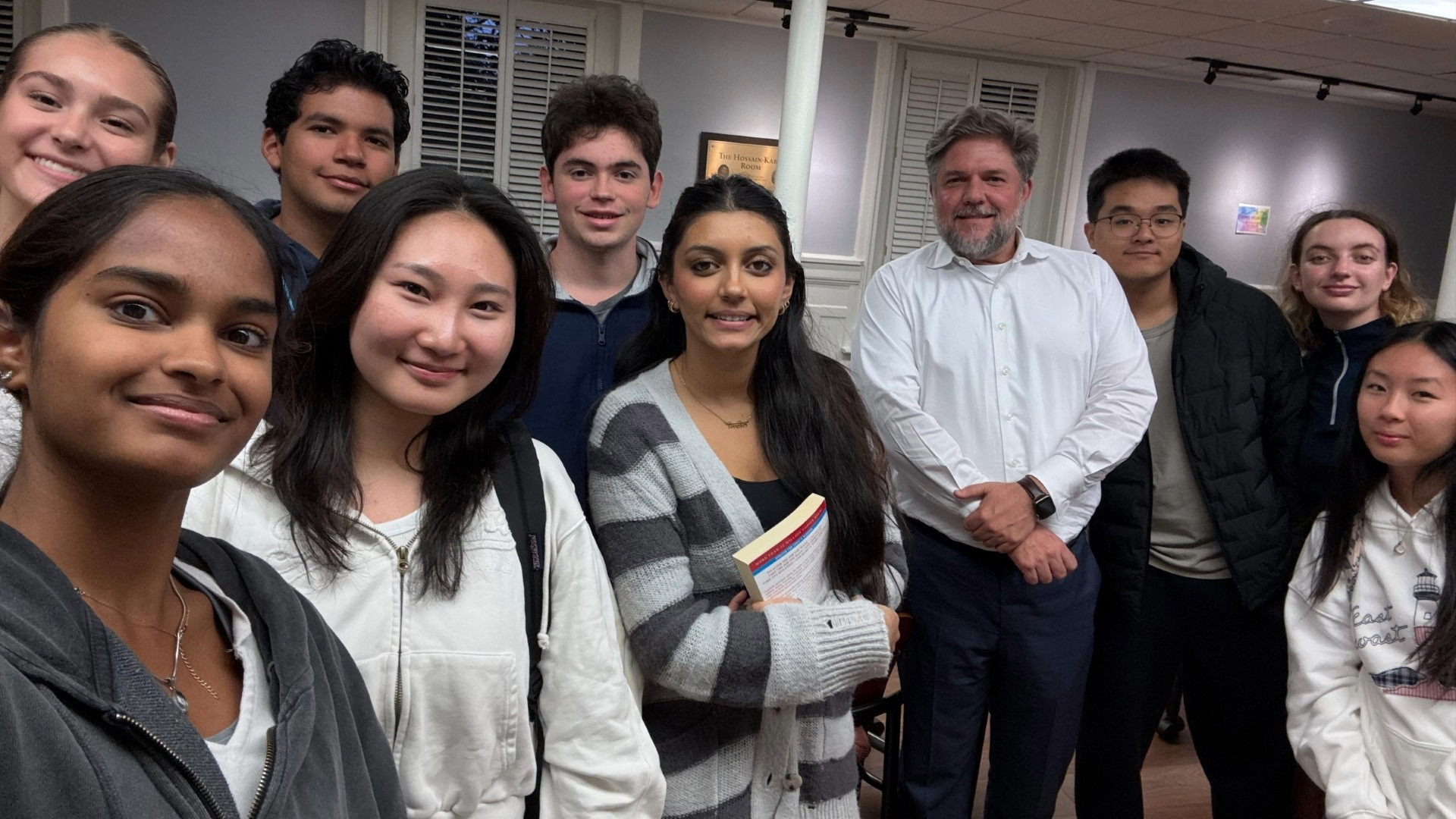
In a classroom at Oxford College of Emory University, students aren’t just learning about conflict — they’re learning how to navigate it. Designed as a 10-week pilot program focused on alternative dispute resolution and civil discourse, the Skills Lab brings students into a hands-on learning environment where communication, mediation, and problem-solving take center stage.
Through collaboration with faculty, alumni, and professional practitioners, students don’t just study conflict—they learn how to work through it.
For sophomore Kimble Schiller, the opportunity stood out immediately.
“Mediation and conflict resolution are skills I value highly, and are prevalent in career paths in which I am interested in, so altogether, this seemed to be a good fit for me going in.”
Learning by Doing
Unlike a traditional lecture-based course, the Skills Lab emphasizes application—giving students the opportunity to practice what they learn in real time.
Students navigate complex scenarios, from analyzing disputes to facilitating mock mediations, all while developing core skills like communication, empathy, and risk assessment.
“Conflict resolution, communications (not just making yourself understood, but making others feel understood), risk assessment, analysis, reading people, empathy,” Schiller says, describing the range of skills explored.
For Dr. Bridgette Gunnels, Associate Dean and Director of the Center for Pathways & Purpose, that hands-on approach is intentional.
“Active listening is a key skill that is required for successful mediation. Once someone practices these skills in a low-stakes environment, it becomes easier for them to lean into their growth.”
The goal, Gunnels says, is not just to teach concepts, but to create space for students to actively practice them — something that can be difficult to replicate in a traditional classroom.
Learning Across Perspectives
A defining feature of the Skills Lab is its collaborative structure. Students learn alongside faculty, alumni, and professional practitioners, each bringing a different perspective to the experience.
“The program brings together students, alumni, and staff… to allow for students to intentionally build different relationships, practice different skills with others, and learn in a way that is both reflective as well as didactic,” Gunnels says.
For alumni facilitator Joseph Alonso, returning to Oxford in this role offered an opportunity to connect professional experience with student learning.
"The Skills Lab provides students the opportunity to learn real-life, professional skills in hands-on, live learning exercises. In this instance, the students analyzed a complex intellectual property dispute and then designed and executed real-world resolution strategies in a mock mediation.”
Drawing on experience in law, Alonso emphasizes the importance of moving beyond surface-level facts to understand the human dynamics at play.
“Getting through the law and facts to the true psychological and emotional issues that drive people, events, disputes and resolutions.”
Moments That Matter
Throughout the program, students encountered moments that challenged their assumptions and strengthened their confidence.
For Schiller, the final roleplay exercise stood out as particularly impactful.
“By far, the most impactful activity we did was the final roleplay, which definitely pushed my mediation abilities.”
Equally valuable, Schiller says, were the relationships formed along the way.
“The interactions were really fantastic… I left every week with some truly solid advice added to my toolkit.”
These moments reflect what makes the Skills Lab distinct: a learning environment where mentorship, collaboration, and skill-building intersect.
Beyond the Classroom
While the Skills Lab introduces students to mediation as a potential career pathway, its impact reaches far beyond any single profession.
“I think good communication and conflict resolution are universally applicable,” Schiller says. “It’s benefited all the relationships in my life to some degree.”
For Gunnels, that broader application is central to the program’s mission. Mediation is not just a professional skill — it’s a life skill, one that supports collaboration, understanding, and effective communication in any field.
Alonso agrees, noting that early exposure to these skills gives students a meaningful advantage.
“These skills are critical to learn as early as possible… and provide a real insight into the practice of law and litigation.”
Looking Ahead
As a pilot program, the Skills Lab represents an evolving model for experiential learning at Oxford—one that bridges classroom concepts with real-world application.
For students like Schiller, the experience has already begun to shape future plans.
“This solidified for me that mediation could be a possible professional role… it helped prepare me for family law and mediation if I do fully pursue a legal career.”
But even beyond career pathways, the program leaves students with something more lasting: the ability to navigate conflict thoughtfully and constructively.
“There will always be conflict somewhere to be resolved,” Schiller says. “And if you can be the one to make that happen, you are inherently valuable in that situation.”