After the PhD: Two Oxford Fellows on Teaching and What Comes Next
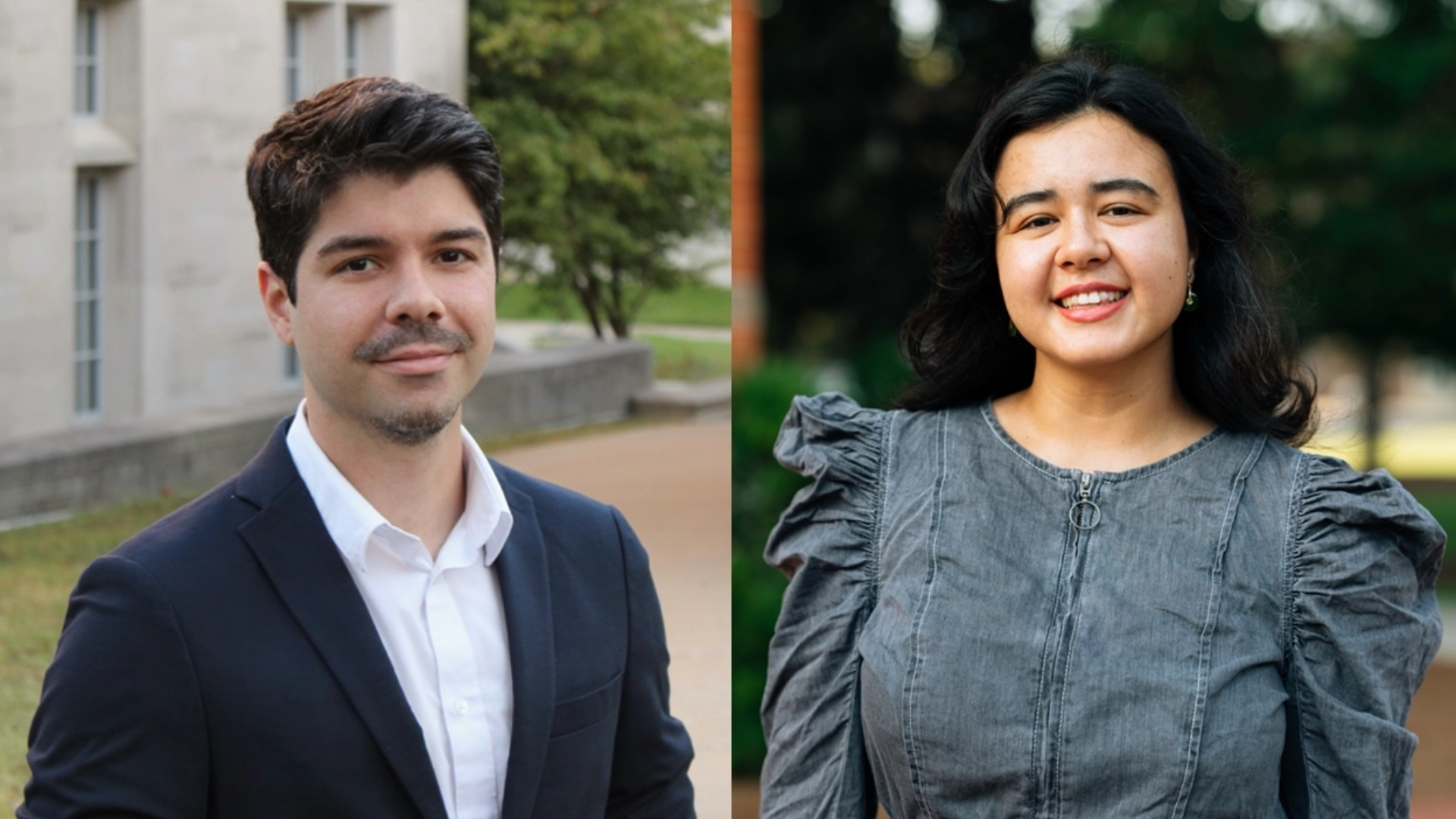
What comes after a PhD? From Canada to Brazil, two Oxford College postdoctoral teaching fellows, one in economics and one in literature, share their paths to pursuing an academic fellowship: what it took to get there, the lessons they’ve learned, and the opportunities they’ve received.
Pursuing an academic endeavor is certainly a daunting task. A doctorate is not the end of the road in academia; for many serious academics, it leads to a series of temporary positions that prepare them for a permanent faculty job. We sat down with two notable Oxford faculty who have gone through that journey themselves.
Dr. Guilherme Paiva Pinto
Growing up in Ceará, Brazil, where economics was a relatively underappreciated field of study, Dr. Guilherme Paiva Pinto was initially drawn to math and history. He decided to explore economics during his undergraduate studies. Though initially hesitant, he solidified his passion for social sciences after studying what would become his main concentration to this day: international trade and economic development. What kept him on the academic path was watching professors work: “I'm a curious person. I like to read; I like to debate. I like to write things.”
After a series of going back and forth between his studies and corporate jobs, which eventually led him to a PhD in Economics in 2026, Dr. Pinto joined Oxford as a postdoctoral teaching fellow, where he currently teaches Econ 112, Principles of Macroeconomics, and uses the fellowship to practice teaching at a small liberal arts college. A large part of his job is developing his teaching skills: “I have to try to test and implement some new strategies of learning,” he said, adding, “We have new ways to learn, and we have new ways to evaluate.” One example is moving past the step-by-step material, such as teaching students how to calculate an index, to a more hands-on application outside the classroom.
Dr. Lilika loki Kukiela
When Dr. Lilika loki Kukiela pursued her honors thesis as an English major at McGill University, she “wanted to continue this lengthy and laborious work of research and writing.” She then decided to pursue a master’s degree and PhD in English, focusing on Asian American studies in relation to other fields of critical ethnic studies, specifically through the lens of literary and cultural analysis. She stayed because of how the work felt: “I think academic work is very individual. But it’s also very collaborative.”
A postdoctoral position is temporary by design; Dr. Kukiela described it as a “time and space for you to do your own work and receive mentoring by other scholars. In order for you to then gain a permanent position as an assistant professor somewhere else.” “You're no longer a student, but you're also not yet in a permanent position,” she said. As a Postdoctoral Teaching Fellow of the Americas, she teaches two courses each semester, including a special course in the Spring Semester of 2027 on Afro-Asian Intimacies, and continues her own research.
Perfecting and Finding Meaning Behind the Craft of Teaching
The transition from PhD candidate to teaching fellow requires a shift in how you approach your work. For Dr. Pinto, that shift came after talking to his students in the first few weeks to find out how he may best accommodate their learning preferences. He keeps detailed notes on every aspect of his job and reviews them each week: “I feel that in this class, the students were losing a little attention at the minute of 25. So, I would need to do something different at the 25-minute mark.” He also highlighted the tight-knit nature of the classes here at Oxford, saying that, as a member of faculty, “In a liberal arts setting,” he has to interact with students more often and “personalize” their experience in class.

As plentiful as the academic resources for these postdocs may be (especially in the form of research grants), both found the “community-focused” aspect of their positions the most meaningful.
Dr. Pinto finds fulfillment in seeing his students improve in class. “I really like it when I see that they are learning,” he explained. The strong academic spirit of these students is the main motivator that keeps him going, especially when they are able to relate the class content to their personal lives:
“There are a few moments in classes when students have a chance to talk about their own experiences, maybe contribute to tell a story…those are the moments in which I think: this is rewarding.”
By the same token, Dr. Kukiela also finds her students to be one of the most understated sources of support for pursuing her academic journey.
“Being able to talk about it, I think not only with faculty members or other scholars in the vicinity, but also with students, has really been helpful to get a sense of, okay, this thing is working, or this thing is not working, and I'm able to continue developing it in this way.”
Both stressed that an academic fellowship was not the end of the journey; attaining a tenure-track position would be the obvious next step. However, they also emphasized that any student who aspires to go into academia should not let a postdoctoral position’s temporary nature take away from the meaningful experience that an opportunity like this offers. Just as Dr. Kukiela says, “A fellowship means having a kind of friendly, communal, familial connection with others, focused on a specific goal or path.”